1. TUBER AESTIVUM

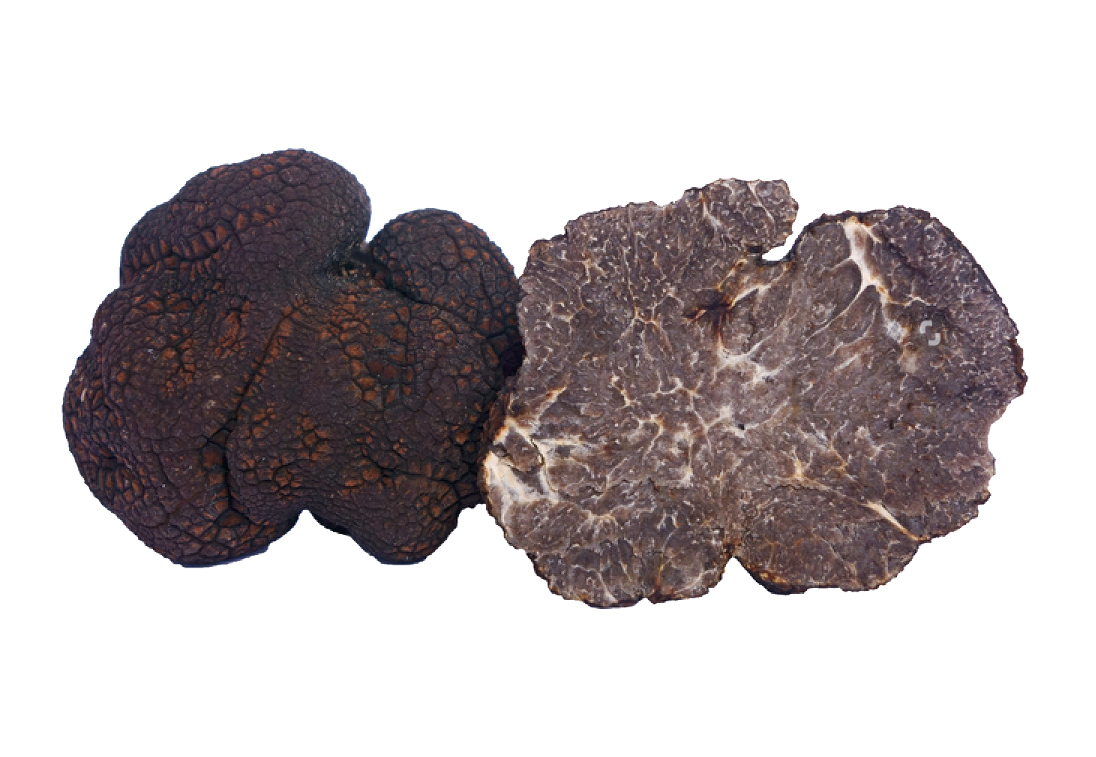
Distinguishing features: This is the so-called black summer truffle. The outside is covered with warts, a beige core with veins of white marble. Its aroma is very different and delicate, slightly nutty. Its low price, combined with a large availability almost throughout the year, makes this truffle a very good option for trying new recipes. Individual ripe specimens can surprise us with their size.

Ripening: From May to September
Distribution: This is the most common truffle in Bulgaria, Italy, Serbia, Romania, etc.

2. TUBER UNCINATUM

Distinctive features: Actually, it is a variety of Tuber aestivum. It has a more pronounced taste and aroma due to the greater depth at which it grows. Its appearance is similar to Tuber aestivum, but the inside is a darker brown color. It has a strong and pleasant aroma.

Ripening: From September to December.
Distribution: Found in Bulgaria, Italy, Serbia, Romania, etc.

3. TUBER BRUMALE

Distinguishing features: This type of truffle prefers wetter locations and colder weather. His warts fall off when brushed his insides are gray with thicker white veins. Its aroma is less persistent but pleasant.

Ripening: From December to April.
Distribution: Central and Southern Europe, it is found in Bulgaria.

4. TUBER MELANOSPORUM

Distinctive features: This is a black winter truffle, its aroma is intense, variable according to the soil and the trees with which it is in symbiosis. Truffles range in size from a pea to the size of a tennis ball. Externally it is covered with “warts” with black tones, inside we see black purple veins surrounded by white. The black winter truffle inhabits the temperate climate zone, grows in the roots of oak, hazel and black hornbeam, prefers limestone terrains. This is the truffle with the widest use in cooking because it retains its aroma for a long time and can be stored dried.

Ripening: From December to March.
Distribution: France and some parts of Italy in Bulgaria is extremely rare.

5. TUBER MACROSPORUM

Distinctive features: Reddish-brown to black in appearance, its surface rough, formed by flat warts. Pinkish-brown core, mottled with marbled light gray veins. Its smell and taste are similar to tuber magnatum, so it is prized by the gourmets. Occurs from October to December.

Ripening: From October to December.
Distribution: Central and Southern Europe, it is found in Bulgaria.

6. TUBER MESENTERICUM / FENICO

Distinctive features: Its appearance is similar to Tuber uncinatum and ripens in the same period as it. Truffles are small, 2 to 5 cm, and with a cavity at the base, they have an irregular round shape with larger or smaller depressions, which when cut give them a kidney-shaped appearance. Its interior is grey-brown, its most characteristic feature being the all-pervading smell of phenol or tar. It is not a common species, but can be found under oak, birch, hazel and beech.

Ripening: From November to February.
Distribution: Central and Southern Europe, it is found in Bulgaria.

7. TUBER BORCHII / BIANCHETTO

Distinctive features: Has a characteristic strong garlic smell, sometimes sharp when very ripe. It resembles tuber magnatum in aroma and appearance, but is much smaller. The size varies from a pea to a tennis ball.

Ripening: From January to April.
Distribution: Central and Southern Europe, it is found in Bulgaria.

8. TUBER MAGNATUM PICO

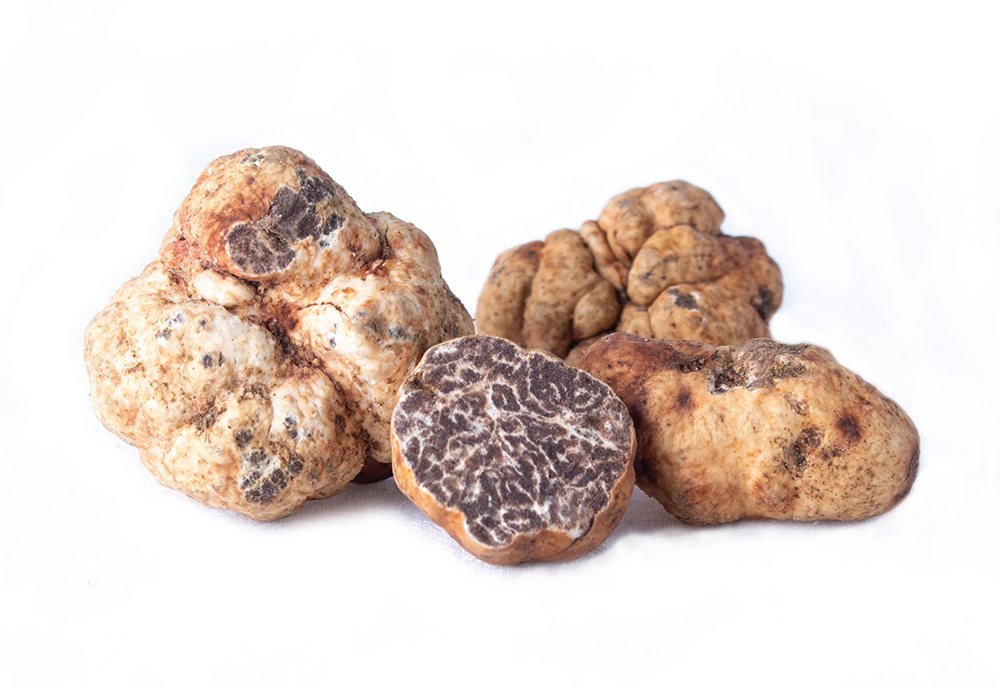
Distinctive features: This is the so-called “white truffle” this is a very rare truffle, there is still no success with its cultivation and this makes it the most expensive truffle. Its season is very short, depending on the region. The white truffle reaches different sizes, from a walnut to a fist /from 5 to 12 cm/. It is pale ocher in color, smooth velvety surface. Its interior is darker in color, reddish-brown, finely streaked with white. This is a very delicate truffle that spoils in a few days. The fragrance is very volatile and therefore cannot be heat processed.

Ripening: Late September to late December.
Distribution: Central Italy, Southern France, Romania, Croatia and Bulgaria.

9. TUBER EXCAVATIUM

Distinctive features: Tuber excavatum, or more commonly known as pork or wood truffle, is irregularly shaped, flattened, sometimes flattened, with a visibly large cavity. They reach 1 to 4 cm. Its bark is brown-orange when it is removed from the ground, then ocher to brown. Its core is hard, solid, brown-red with marbled yellowish, branching veins. Its smell is more or less intense depending on the season, sometimes of garlic. Unpleasant at full maturity. An easy-to-find truffle for dogs.. Found in calcareous soils, associated with deciduous and coniferous trees. Tuber excavatum is a very common truffle. It ripens throughout the year if the conditions are favorable. This is a truffle with no economic value.